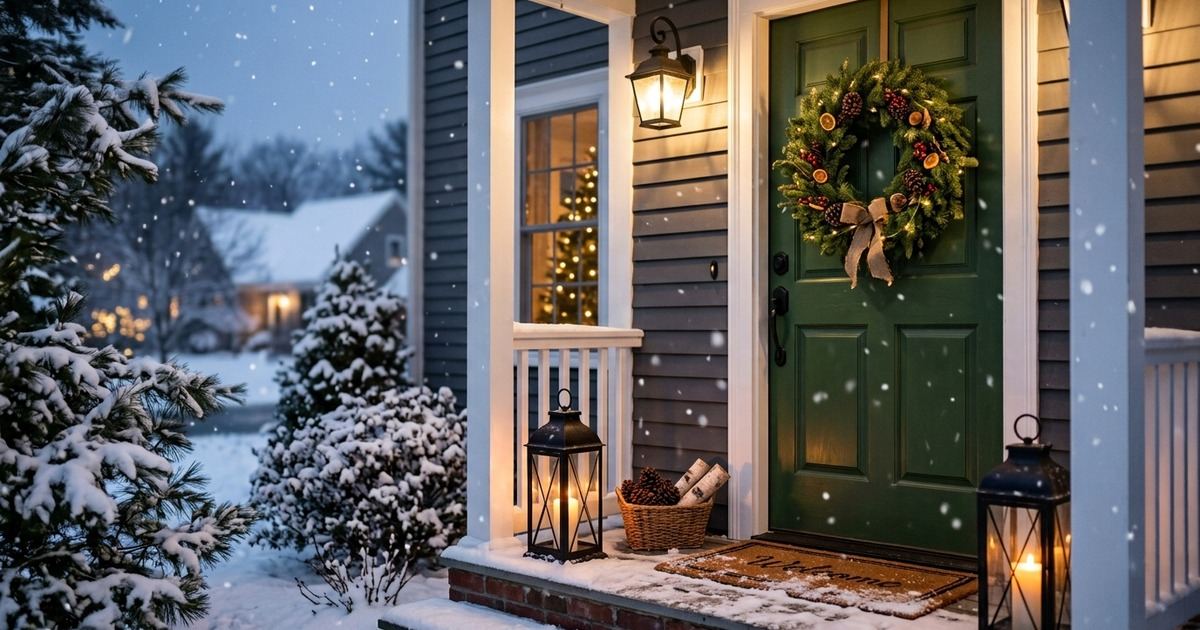
There's a specific kind of satisfaction in pulling into your own driveway in December and actually liking what you see. Good christmas outdoor decor isn't about buying more, it's about layering the pieces you have so the whole front of the house reads as one warm, deliberate scene instead of a pile of decorations. I've redone my own porch three years running, and every year the version that got compliments was the simpler one.
- Layer your lighting in three zones instead of stringing lights randomly around the yard
- Build one clear focal point at the entry before decorating anything else
- Stick to a two- or three-color story so the whole display reads as intentional
- Start With a Layering Framework, Not a Shopping List
- 1. Light in Three Zones
- 2. Build a Real Entry Moment
- 3. Dress the Windows
- 4. Wrap the Railings and Mailbox
- 5. Mark the Path
- 6. Go Big on One or Two Statement Pieces
- 7. Bring in Natural Texture
- 8. Pick a Color Story and Stick to It
- 9. Don't Skip the Mailbox and Lamp Post
- 10. Add One Element of Movement or Sound
- 11. Use Containers as Anchors
- 12. Leave Room for the Snow
- When to Start Decorating
- Outdoor Lighting Safety Checklist
- FAQ
Start With a Layering Framework, Not a Shopping List
Before you touch a single string of lights, walk to the end of your driveway or across the street and actually look at your house the way a stranger would. Most outdoor Christmas displays fail for one reason: everything is decorated at the same visual distance, so the eye has nowhere to land. The fix is to think in three layers, far (roofline and tree canopy), mid (porch and windows), and near (path and mailbox), and make sure each layer has at least one thing happening in it.
This is the same principle professional holiday decorators use on commercial properties, and it works just as well on a small ranch house as it does on a big colonial. You're not trying to fill every layer with decorations. You're making sure your eye travels from far to near and finds something warm at each stop.
1. Light in Three Zones
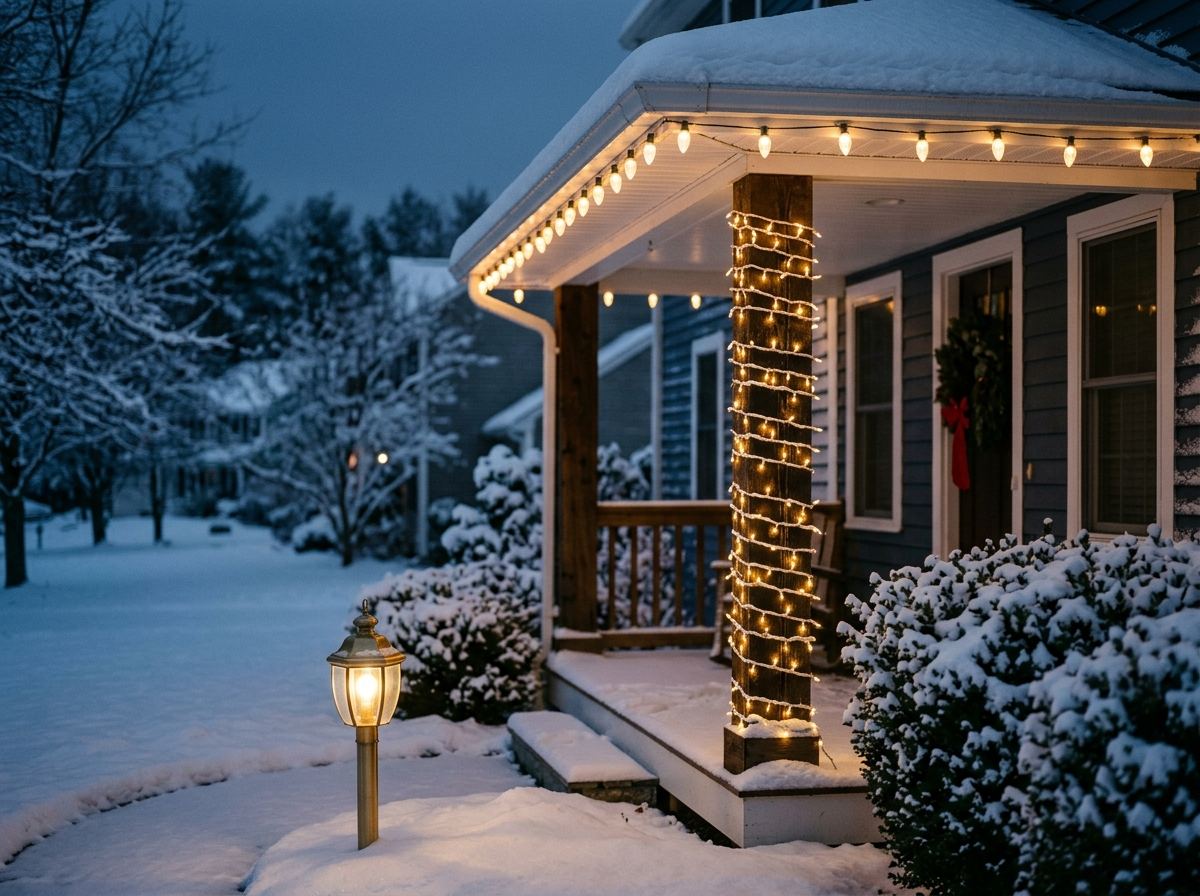
Lighting is the layer that does the most work after dark, which is when most neighbors and passersby actually see your house. Instead of buying one giant box of lights and wrapping whatever you reach first, split your budget and your effort across roofline, structure, and ground level.
Roofline lights (C9 bulbs read as more premium than mini lights from the street) outline the shape of the house. Structural lights wrap porch posts, window frames, or a single tree near the entry. Ground-level lights, like low-voltage path lights or a string tucked into a planter, keep the display from feeling like it stops at eye level. A $40 reel of warm-white C9s on the roofline plus a $15 pack of path lights will read as more intentional than $150 worth of mixed-color icicle lights dumped on the gutters.
Stick to warm white (2700K) or a warm-white-plus-one-accent-color combo. Mixing five colors of light across three zones is what makes a display look chaotic rather than festive, even when a lot of money went into it.
2. Build a Real Entry Moment
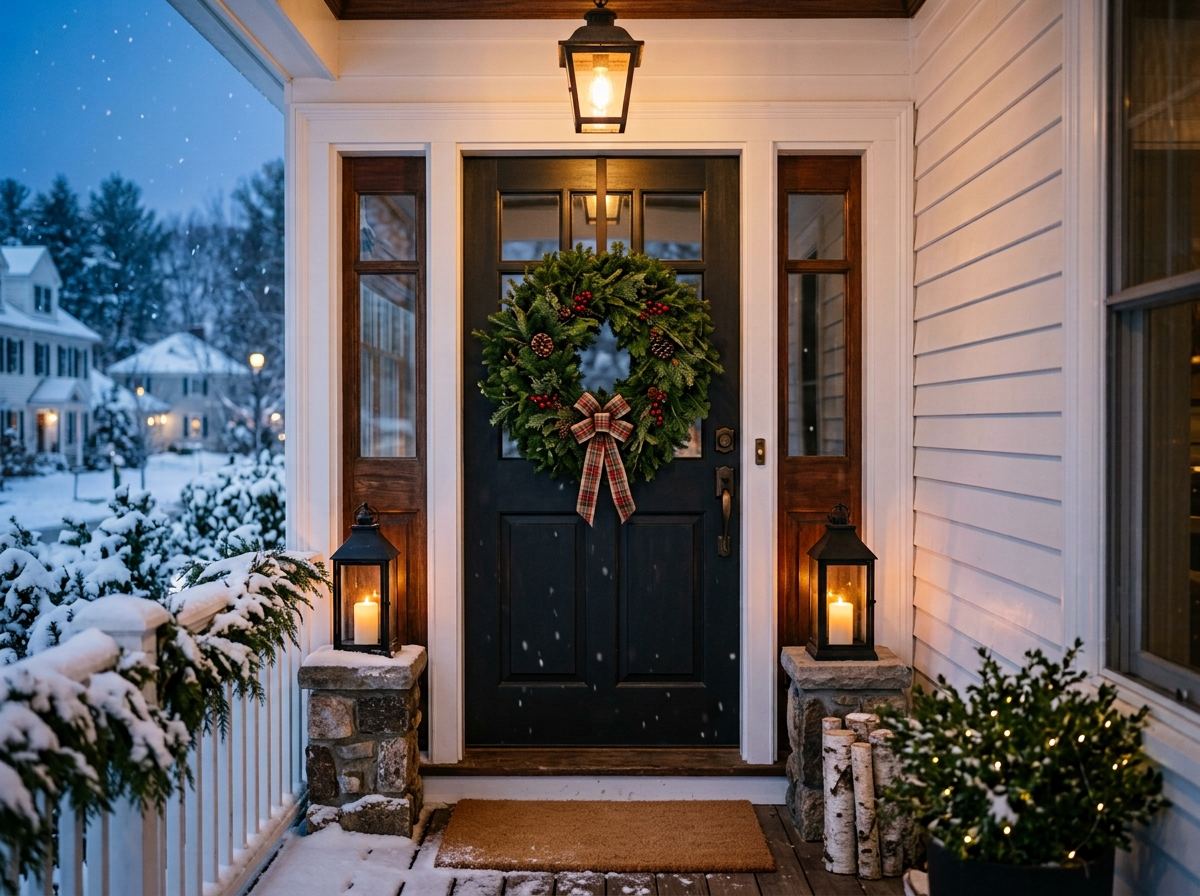
Your front door should be the single most decorated square foot of your property, because it's where every guest, delivery driver, and passerby's eye eventually goes. Before you spread decorations around the yard, spend your best material on the door itself.
A wreath sized correctly for your door (roughly a third of the door's width, not a small one lost in the middle) does more visual work than an entire yard of inflatables. Flank the door with a pair of matching lanterns, urns, or tall branches in planters, symmetry at the entry reads as calm and welcoming even if the rest of the yard is more relaxed and asymmetrical. Add a doormat that actually coordinates with the season instead of a leftover summer one.
I switched to this approach after years of spreading decorations thin across the whole yard, and it's the single change that got the most "your house looks so nice" comments from actual neighbors, not just holiday-card photos.
3. Dress the Windows
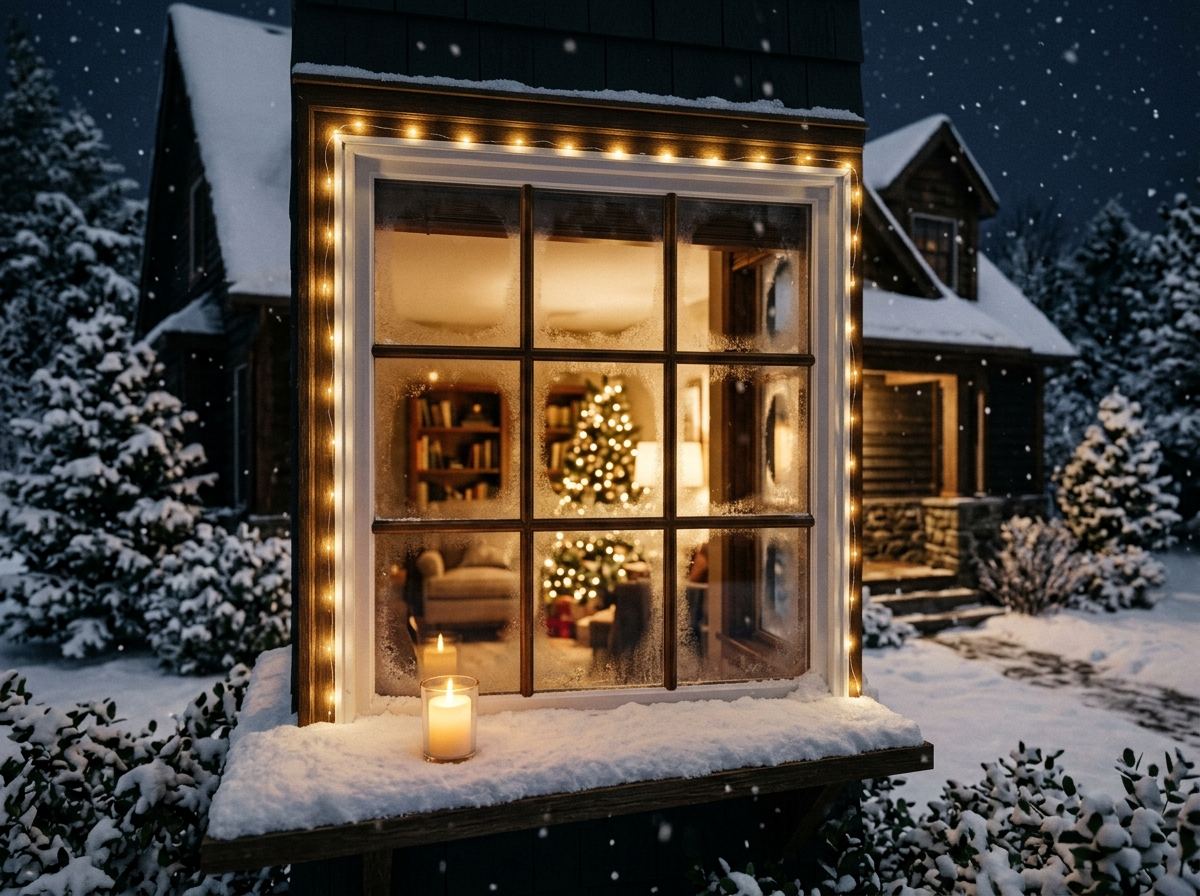
Windows get skipped constantly because they feel like an interior decorating job, but from the street, a lit window at night is one of the warmest things a house can show. A single battery-operated candle in each front-facing window, on a timer, does more for curb appeal after dark than most people expect.
If you want to go further, a thin strand of warm-white lights outlining just the window trim (not the whole wall) adds structure without looking like a competing lighting zone. Skip the temptation to add a big lit decal or spray snow directly on the glass unless you're prepared to clean it off in January, it's one of those choices that looks fun for a week and tedious for a month.
4. Wrap the Railings and Mailbox
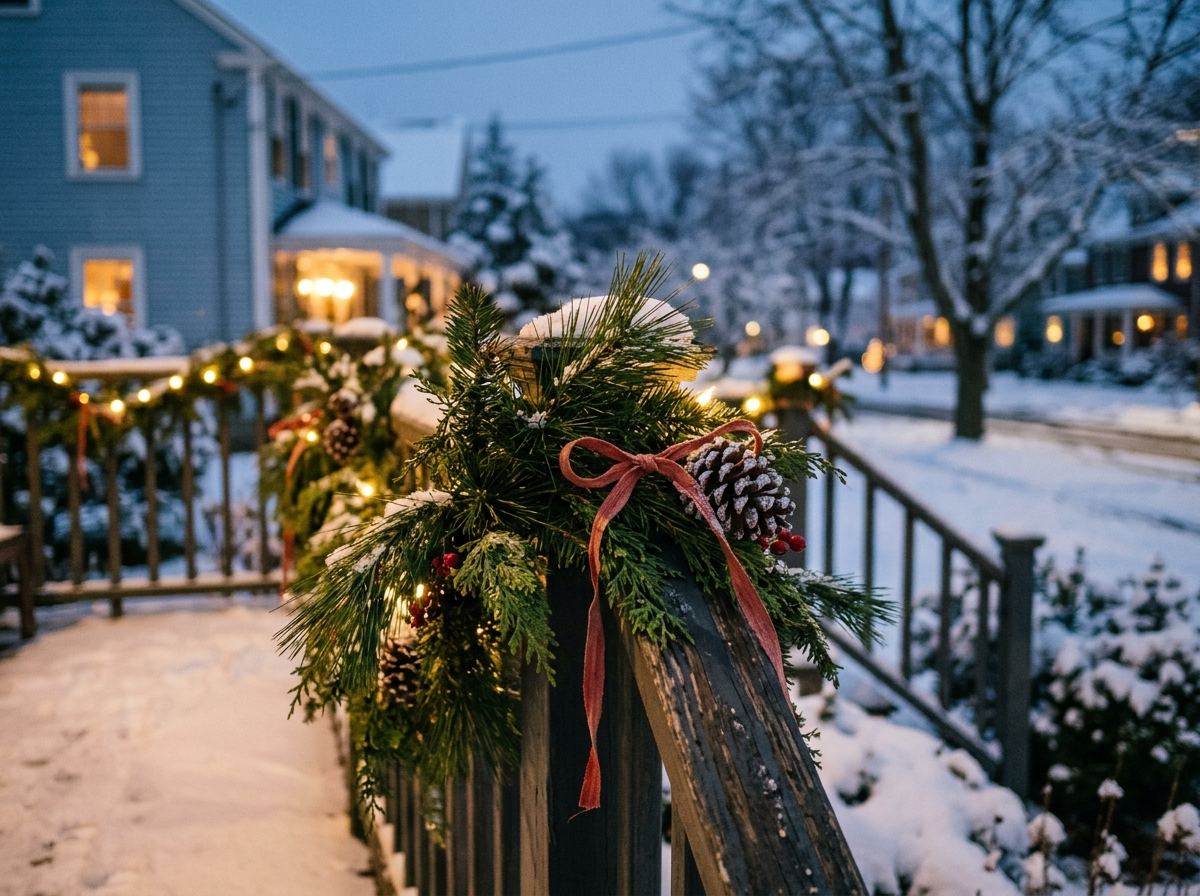
Porch railings are an easy, cheap win because a single garland (real or faux) instantly reads as "decorated" even before you add anything else. Wrap it loosely rather than pulling it taut, a garland pulled too tight looks like packing material instead of greenery.
Tuck in a few pinecones, a handful of small ornaments, or a thin ribbon in your accent color every foot or two, evenly spaced but not perfectly symmetrical (perfect symmetry on a garland reads as artificial even when the garland itself is real). If your railing is metal or thin, zip ties hidden under the greenery hold better than trying to weave the garland through the balusters.
5. Mark the Path
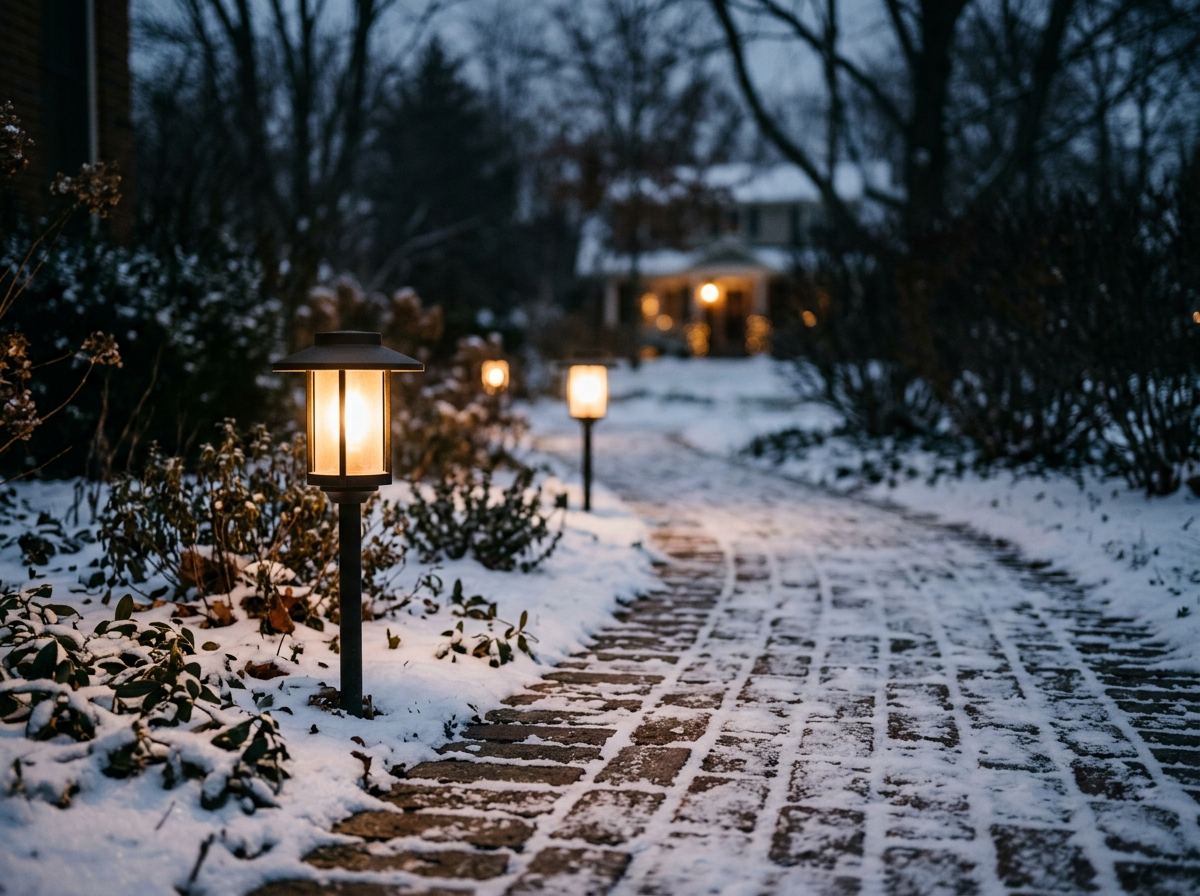
A path that's dark and decorated only at the porch misses the chance to build anticipation before a guest even reaches the door. Solar or low-voltage path lights along a walkway, spaced every four to five feet, do this without adding another thing to plug in.
For a budget version, mason jars with battery tea lights, set along the path edge, get you eighty percent of the effect for a fraction of the cost of permanent path lighting. Just check on them after the first snow or hard rain, tea lights and jars both have a way of tipping over or filling with water if you don't glance at them every few days.
6. Go Big on One or Two Statement Pieces
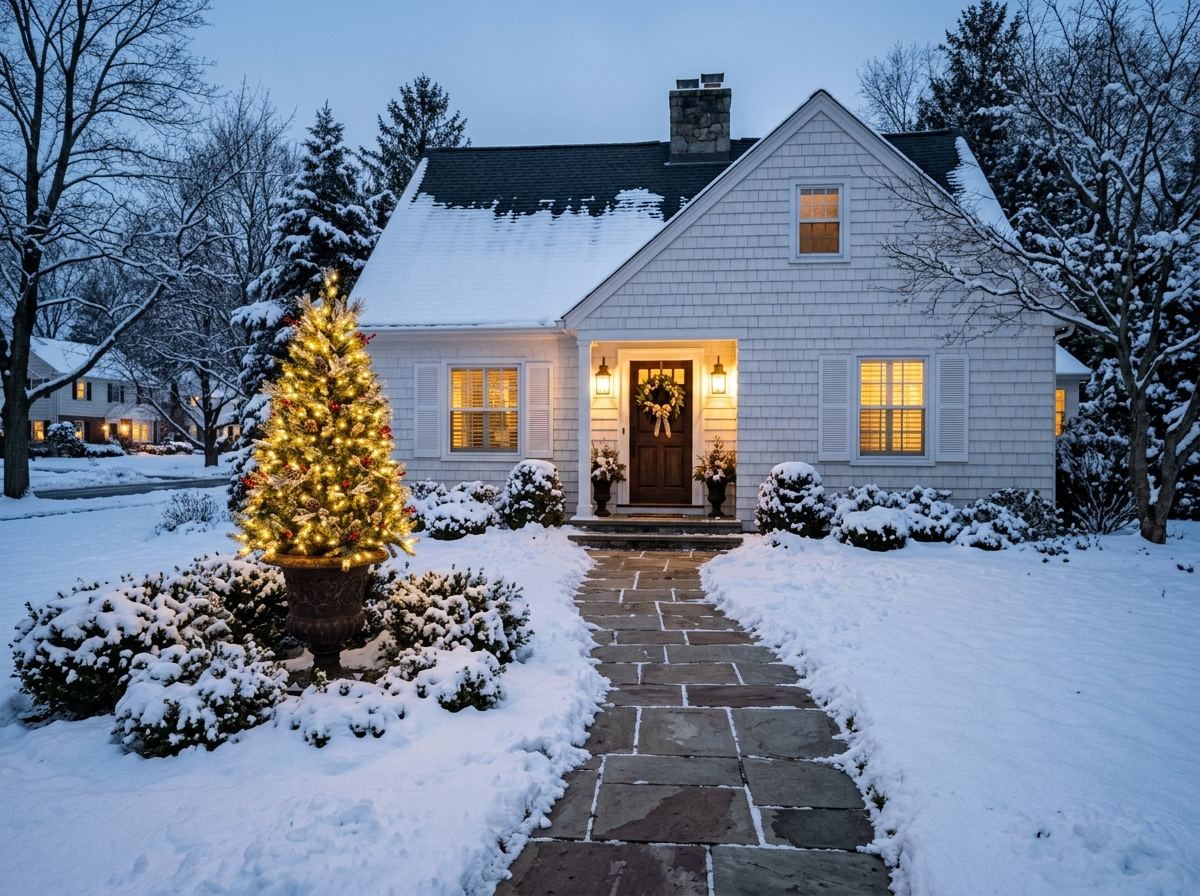
A yard full of small decorations from five different years never reads as cohesive, but one or two larger pieces, a lit reindeer silhouette, an oversized ornament, a proper Christmas tree in a large planter, gives the whole display an anchor. Pick your statement piece based on your house's scale: a tiny front yard gets overwhelmed by a 6-foot inflatable, but the same yard can easily hold one well-placed lit tree in a large urn.
Place the statement piece where it's visible from the street but not blocking the front door or the walkway, off to one side of the entry usually works better than dead center.
7. Bring in Natural Texture
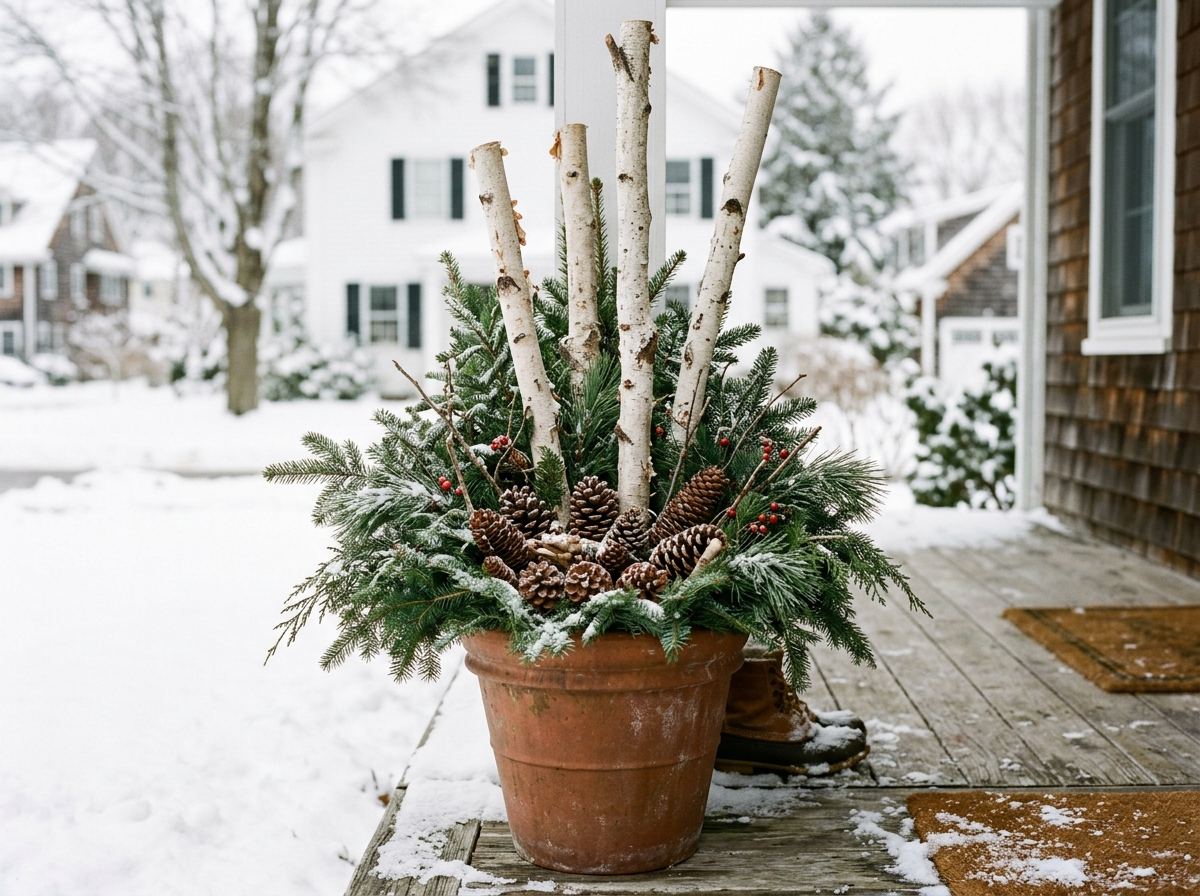
Plastic and lit decorations do the sparkle, but real (or realistic faux) natural material is what keeps a display from looking like it came entirely out of a box. Fresh evergreen boughs tucked into porch planters, a scatter of pinecones near the entry, or birch branches spray-painted white and stood in a tall vase all add texture that catches light differently than anything plastic does.
This is also one of the cheapest layers to add. A bundle of evergreen clippings from your own yard, or a $10 bag from the garden center, goes a long way when tucked into existing planters rather than treated as its own separate display.
8. Pick a Color Story and Stick to It
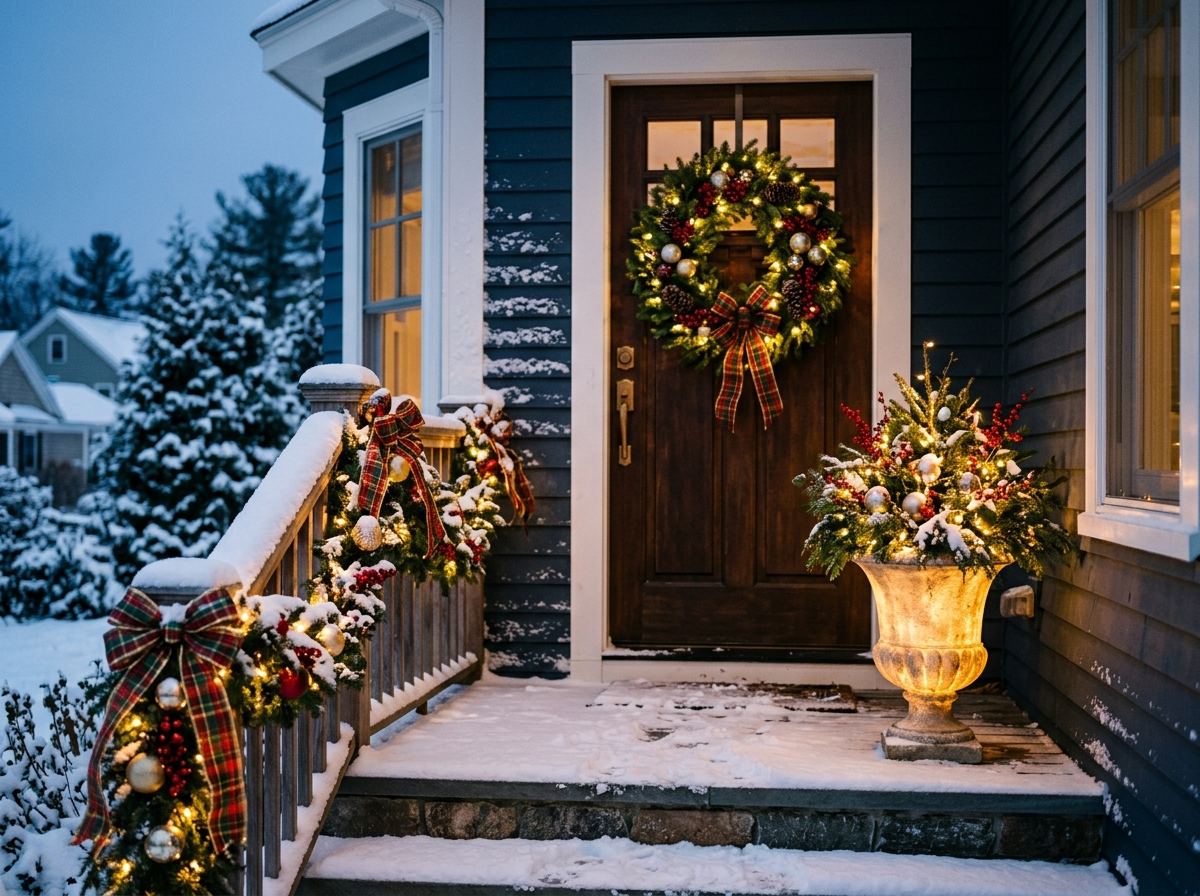
This is the rule that quietly separates the displays people compliment from the ones that just look busy. Choose two colors, plus warm white, and commit to them everywhere: lights, ribbon, ornaments, even the bow on the wreath. Classic red and gold, all warm white with a single blue accent, or a modern all-white-and-silver look all work, the specific colors matter less than the discipline of not adding a third or fourth color halfway through.
If you already own decorations in mismatched colors, don't throw them out, just group by color rather than mixing. A red-and-gold cluster on one side of the porch and a separate warm-white-only cluster on the other reads far better than blending everything together.
9. Don't Skip the Mailbox and Lamp Post
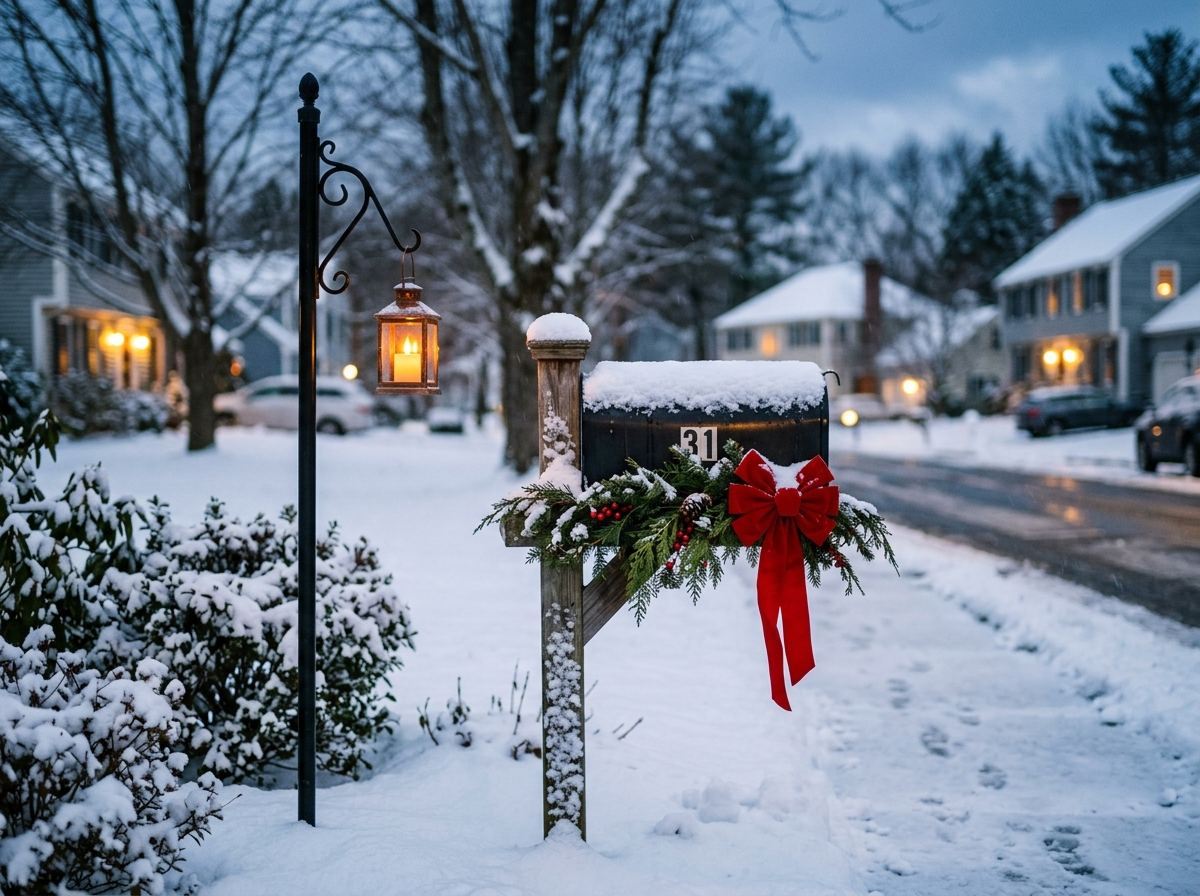
These two spots get forgotten constantly because they're a few steps away from the main display, but they're often the first thing someone sees when they turn onto your street. A small wrapped garland on the mailbox post, or a single lit lantern hung from a lamp post hook, closes the gap between "decorated house" and "decorated property."
Keep it simple here, one garland and one bow is plenty. The mailbox and lamp post are supporting characters, not another statement piece competing with your entry.
10. Add One Element of Movement or Sound
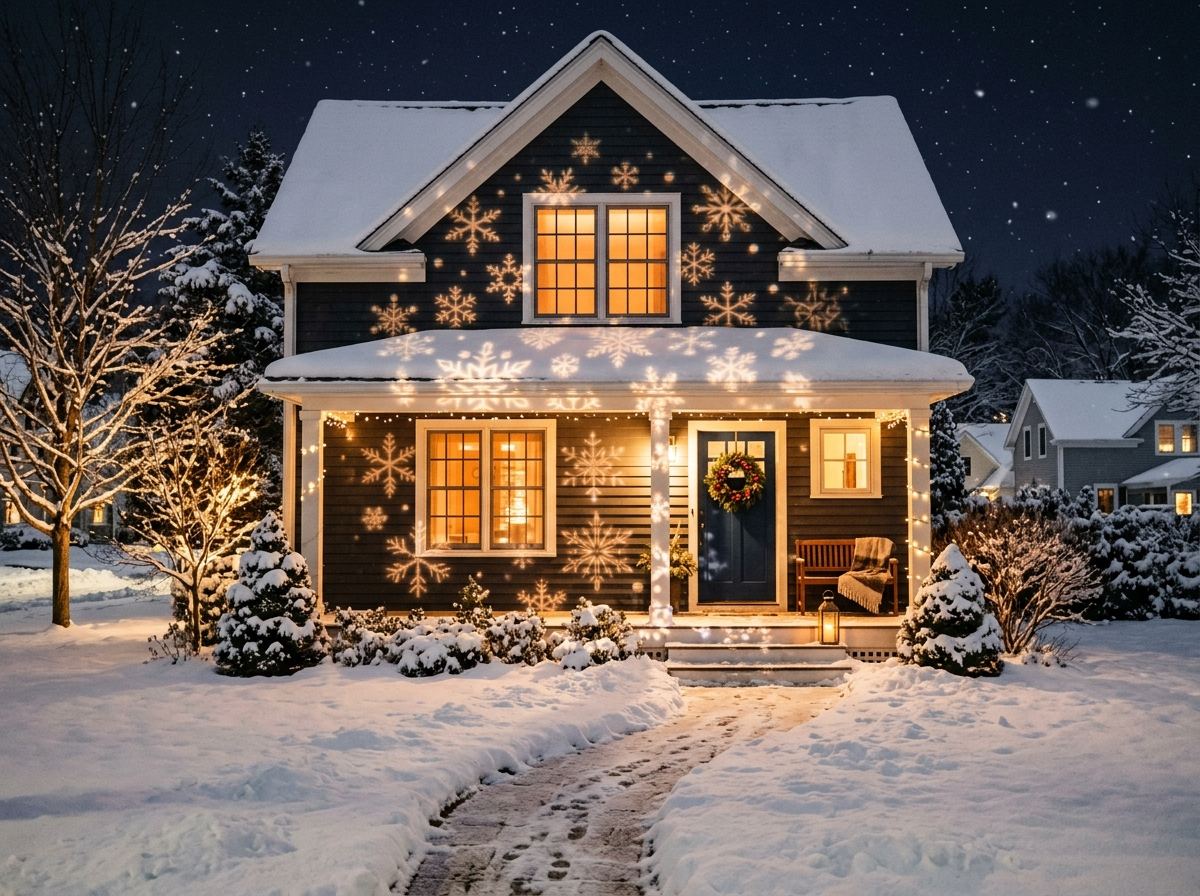
Static lights are beautiful, but one small moving or musical element gives a display personality, especially for families with kids. A projector that casts snowflakes or lights across the front of the house, a single animated figure, or a motion-activated chime by the walkway all work without turning your yard into a full light show.
Pick one. Two or three moving elements start to compete with each other and pull attention away from the layered lighting you spent time getting right.
11. Use Containers as Anchors
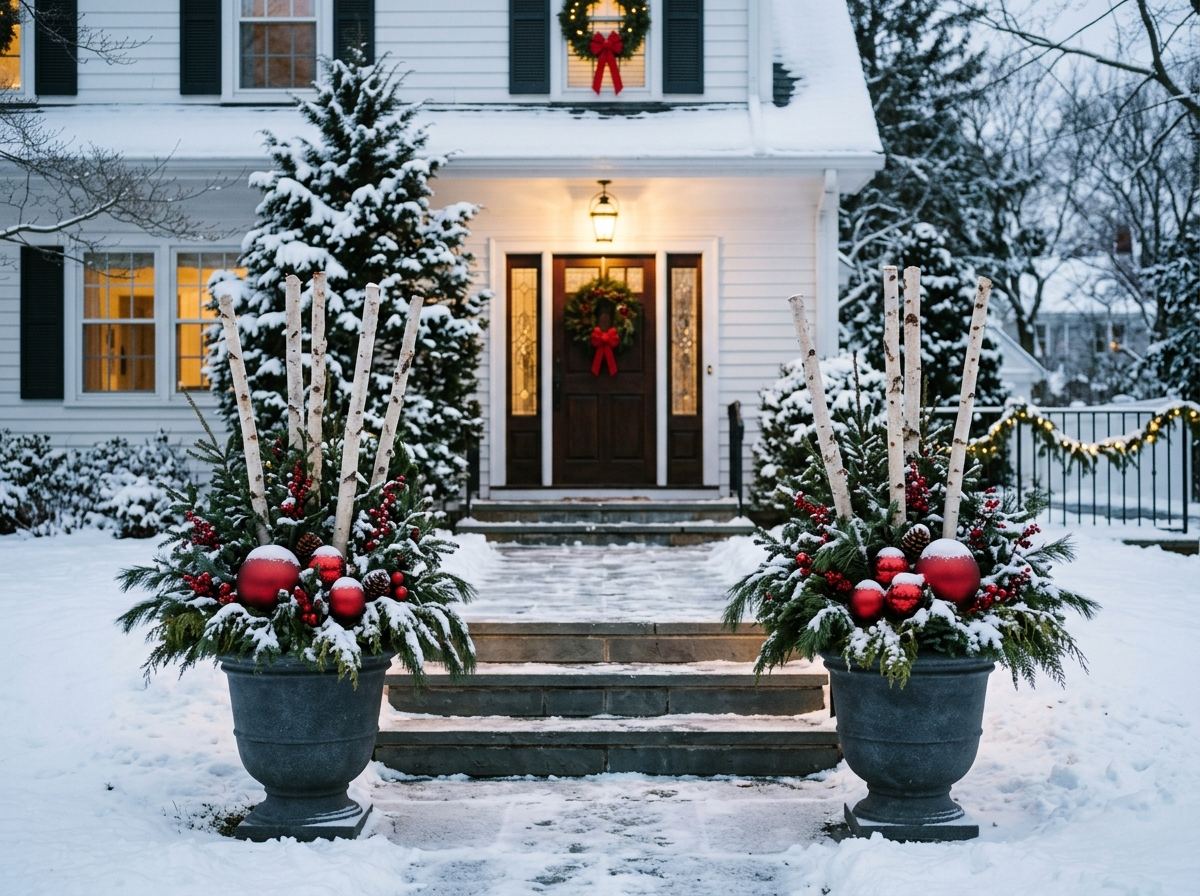
Existing planters, urns, and pots don't need to sit empty just because the flowers are gone. Fill them with a mix of evergreen branches, a few tall birch stems, and a couple of oversized ornaments wired in place, and you've turned a dead planter into a seasonal focal point without buying a single new piece of hardscaping.
Two matching filled containers flanking the front steps do the same symmetry trick as matching lanterns, and they're often something you already own.
12. Leave Room for the Snow
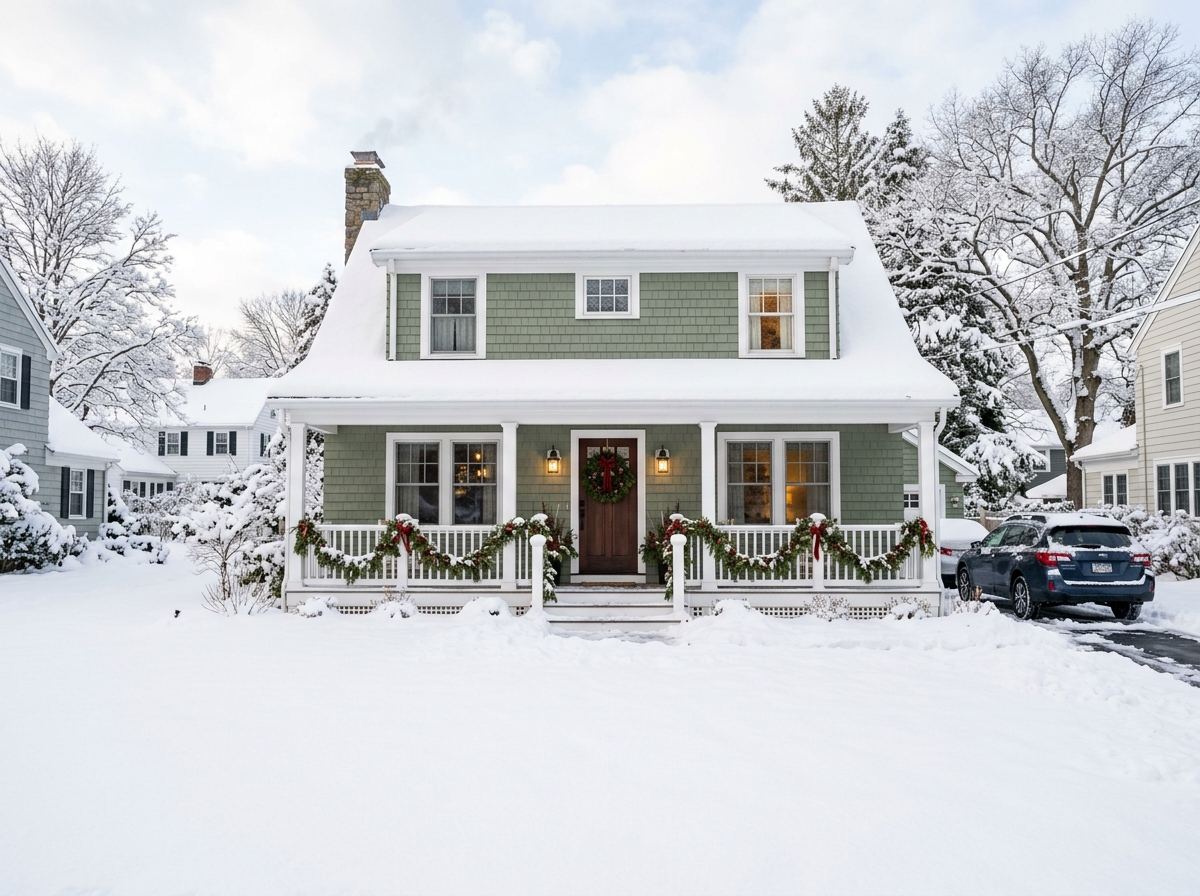
If you live somewhere that actually gets snow, resist the urge to fill every visible surface with decoration. Snow itself is part of the display, and a display with some breathing room lets fresh snow catch light and texture instead of just burying decorations you can no longer see. A few open, undecorated stretches of lawn or roofline aren't a missed opportunity, they're what makes the decorated parts stand out.
When to Start Decorating
The weekend after Thanksgiving is the traditional start in most of the U.S., and it's a reasonable target: cold enough that battery lights last longer, but usually before the first hard freeze makes outdoor work miserable. If you're doing anything that involves a ladder, aim for a dry, low-wind day, wet gutters and holiday lighting are a bad combination.
Plan to take everything down by early-to-mid January. Leaving Christmas lights up into February is one of those small things that quietly changes how a house reads from the street, even to people who couldn't say exactly why.
Outdoor Lighting Safety Checklist
- Use only lights and extension cords rated for outdoor use, the packaging will say so explicitly
- Plug outdoor lights into a GFCI-protected outlet, and test the outlet's test/reset button before you rely on it
- Keep extension cord connections up off wet ground, a simple plastic connector cover or zip-tied loop works
- Check each string of lights for cracked sockets or exposed wire before hanging it, not after
- Set everything on a timer so lights aren't running unattended all night
- Avoid overloading a single outlet, most outdoor outlets are rated for less than you'd expect once you add up several strings
FAQ
How many strings of lights do I actually need for an average house front?
For a typical single-story front, figure roughly 100 mini lights (or one 25-foot C9 strand) per 6 feet of roofline, plus a separate strand for the entry and one for a tree or shrub. Measure your roofline first so you're not guessing at the store.
Is it cheaper to buy real garland or faux?
Real garland costs less upfront but needs replacing every year and can dry out and drop needles indoors near heat. Faux garland costs more the first year but is usually cheaper over three or four seasons, and it won't shed on your porch.
What's the biggest mistake people make with outdoor Christmas decor?
Mixing too many colors and styles at once. A smaller display with one clear color story consistently reads better than a larger display with five different decoration styles competing for attention.
Do I need a professional to hang roofline lights?
Not for a typical single-story home if you're comfortable on a ladder and follow basic safety steps. For steep rooflines, second-story work, or anything requiring you to lean out over an edge, it's worth the cost of hiring it out.
Whichever layer you tackle first, the goal is the same: a display that looks like one decision, not a dozen small ones. Save this one for when you're ready to plan your own porch, and if you try the three-zone lighting layer this year, it's worth noticing how different your street looks after dark.