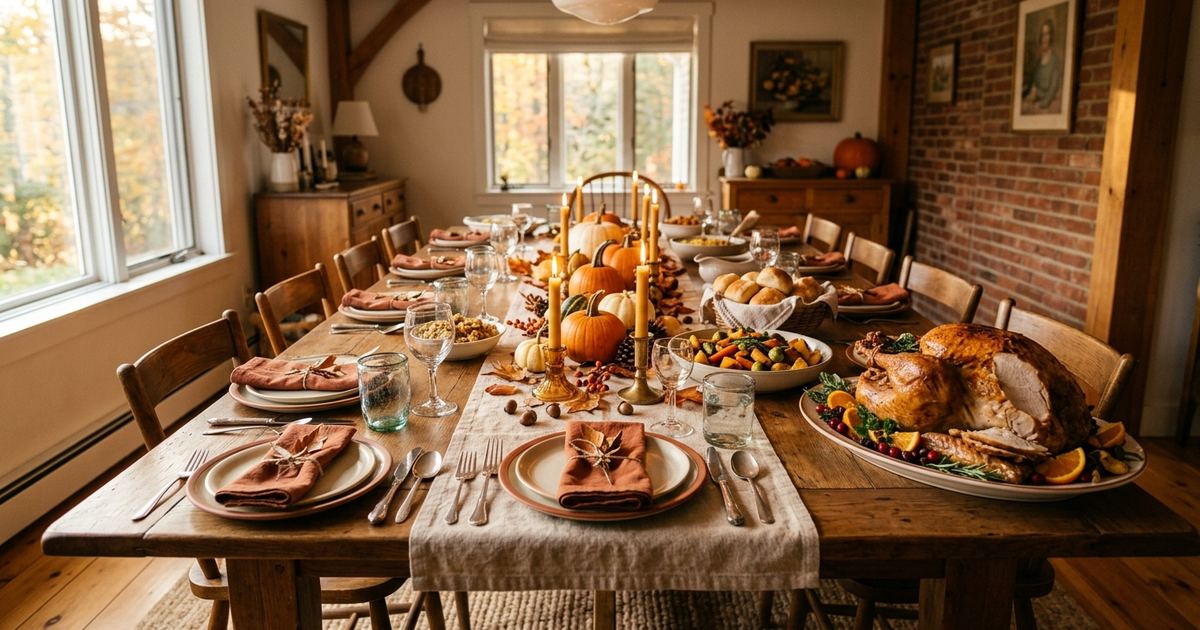
The first time I hosted Thanksgiving, I spent so much time in the kitchen that I missed half the actual dinner conversation happening ten feet away. Good thanksgiving hosting ideas aren't really about the turkey, they're about building a day where you're not the only person working. Whether it's a formal family Thanksgiving or a looser Friendsgiving with people bringing whatever they've got, the same handful of decisions make the difference between a host who enjoys their own party and one who collapses on the couch afterward.
- Build a written timeline that works backward from serving time, not forward from when you wake up
- Turn Friendsgiving into an actual potluck with assigned categories, not a vague "bring something" ask
- Set up self-serve stations for drinks and appetizers so you're not the bottleneck all afternoon
- 1. Work Backward From Serving Time
- 2. Assign Potluck Categories, Not Just "Bring a Dish"
- 3. Set Up a Self-Serve Drink Station
- 4. Put Out Appetizers Guests Can Graze On
- 5. Plan the Table Before You Plan the Food
- 6. Give Kids Their Own Setup
- 7. Build in One Low-Effort Activity
- 8. Prep a Leftovers Plan Before Dinner Starts
- 9. Handle the Awkward Guest List Moments in Advance
- 10. Do One Small Thing That Guests Remember
- Sample Hosting Timeline
- FAQ
1. Work Backward From Serving Time
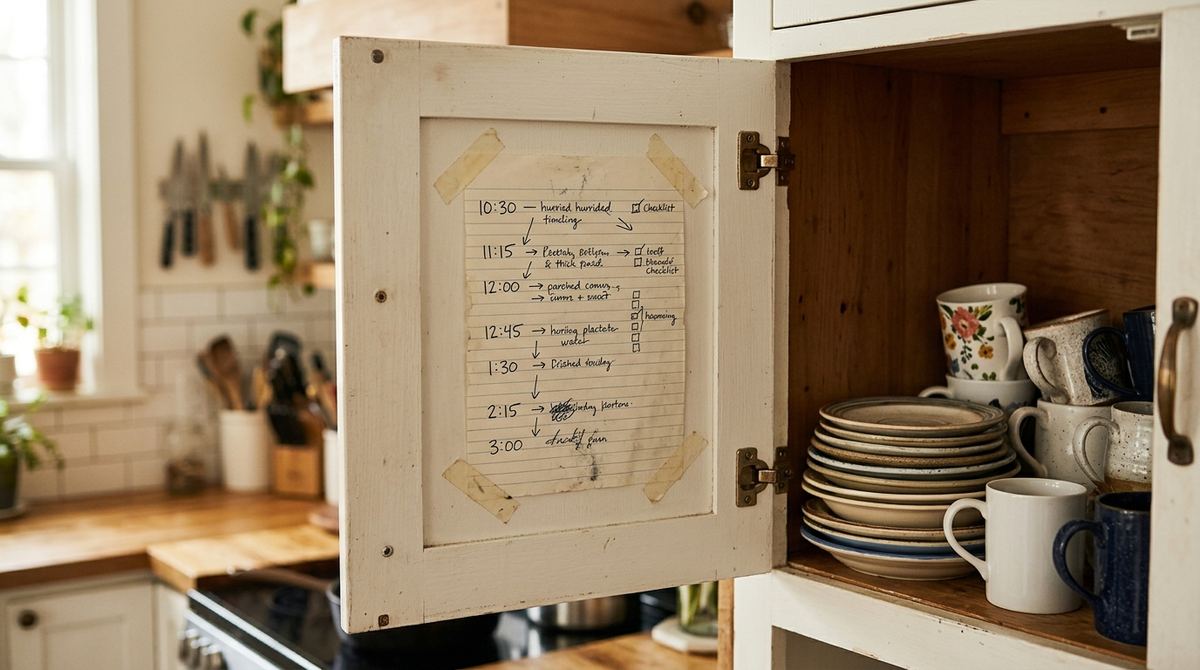
Most hosting stress comes from planning forward: you wake up, start cooking, and hope it all lines up. Instead, pick your serving time first, then work backward, writing down what needs to happen 4 hours before, 2 hours before, 1 hour before, and 15 minutes before. A turkey that needs to rest for 30 minutes after coming out of the oven means your "done cooking" time is actually 30 minutes before you eat, not at it, and that one detail alone throws off an entire unplanned day.
Write the timeline on paper or in your phone's notes app and tape a copy to the inside of a cabinet door. You will not remember it under pressure, even if it feels obvious the night before. I write mine the week of, and I still forget half of it by Thursday morning without the note taped up.
Build in a 30-minute buffer somewhere in the middle of the timeline. Something always runs long, usually the thing you were most confident about.
2. Assign Potluck Categories, Not Just "Bring a Dish"
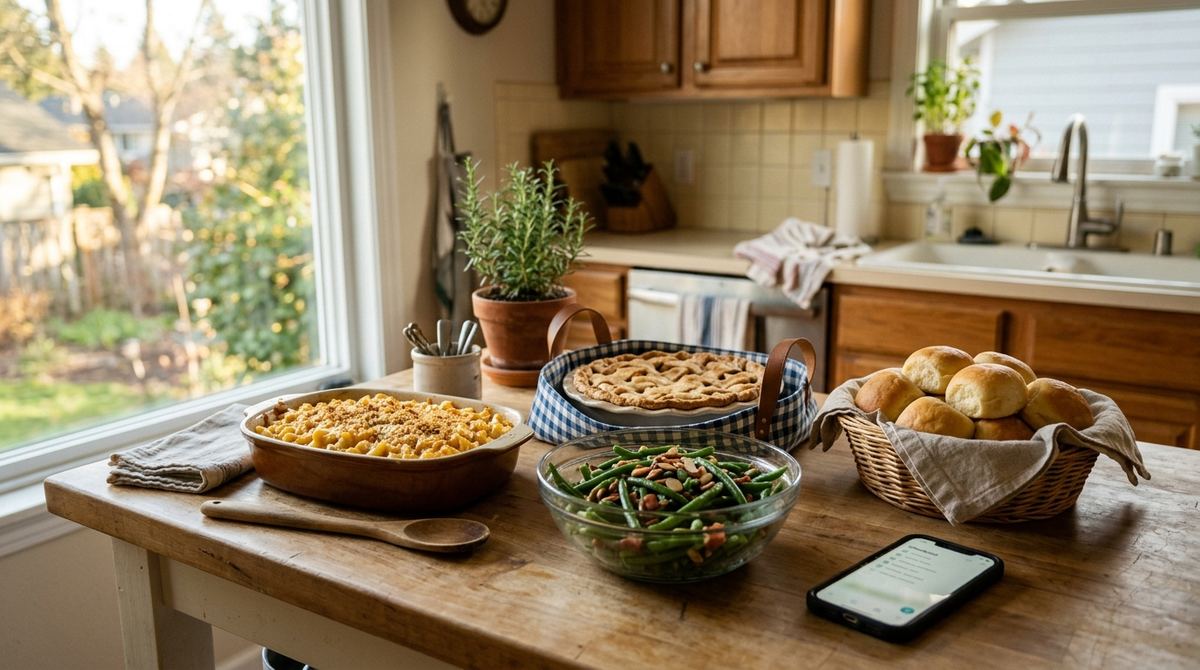
Friendsgiving lives or dies on food coordination. "Bring something" reliably produces four bags of chips and zero vegetables, because everyone defaults to the easiest option when the ask is vague. Instead, assign categories: one person on a starch, one on a vegetable, one or two on dessert, someone on drinks, and you handle the main.
Text the assignments directly rather than posting a group chat and hoping people self-select, a direct ask gets a direct yes far more often than an open call for volunteers. If you have twelve guests and only need six dishes, ask the other six to bring drinks, ice, or a disposable-container run for leftovers, everyone still contributes without overloading your fridge with seven variations of mashed potatoes.
Keep a running list of who's bringing what in one shared note so you can catch overlap and gaps a week out, not the morning of.
3. Set Up a Self-Serve Drink Station
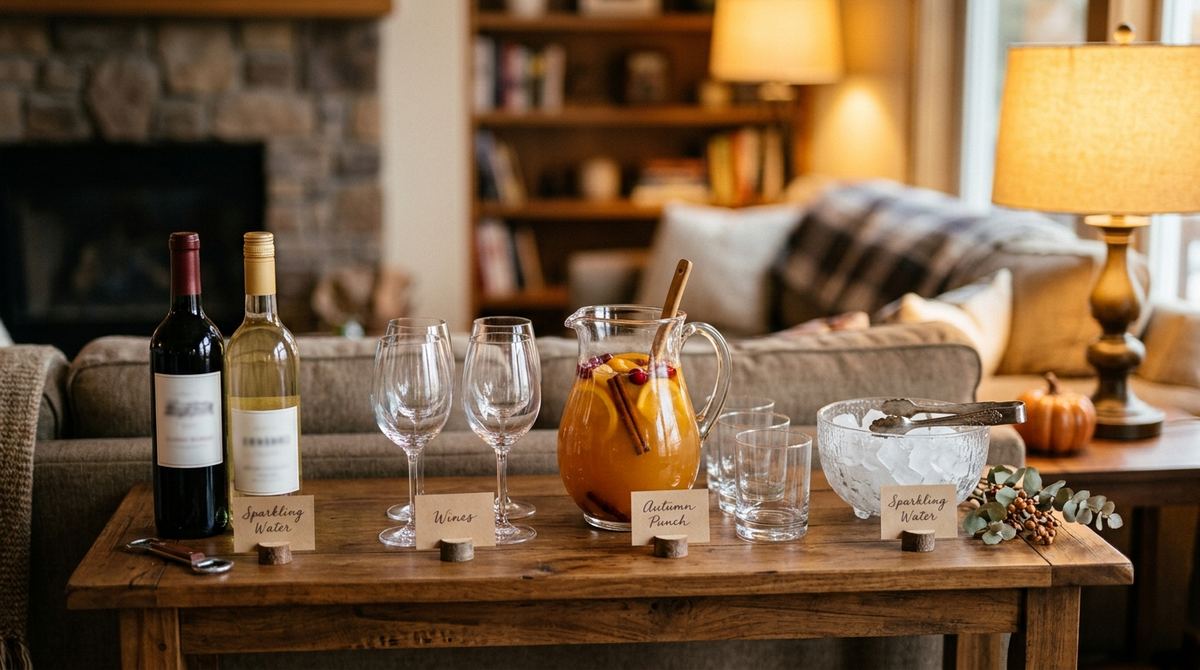
A drink station on a side table or counter, away from the food, keeps people from clustering around you asking what you have. Stock it with a couple of easy options: a pitcher of something mixed, a few bottles of wine, sparkling water, and a non-alcoholic option that isn't just tap water. Label them if you're feeling thorough, a small handwritten card next to each option speeds things up more than you'd expect.
Put ice in a separate bowl or cooler at the station instead of the freezer, guests digging through your freezer for ice cubes mid-party is a small thing that adds up to a lot of interruptions.
4. Put Out Appetizers Guests Can Graze On
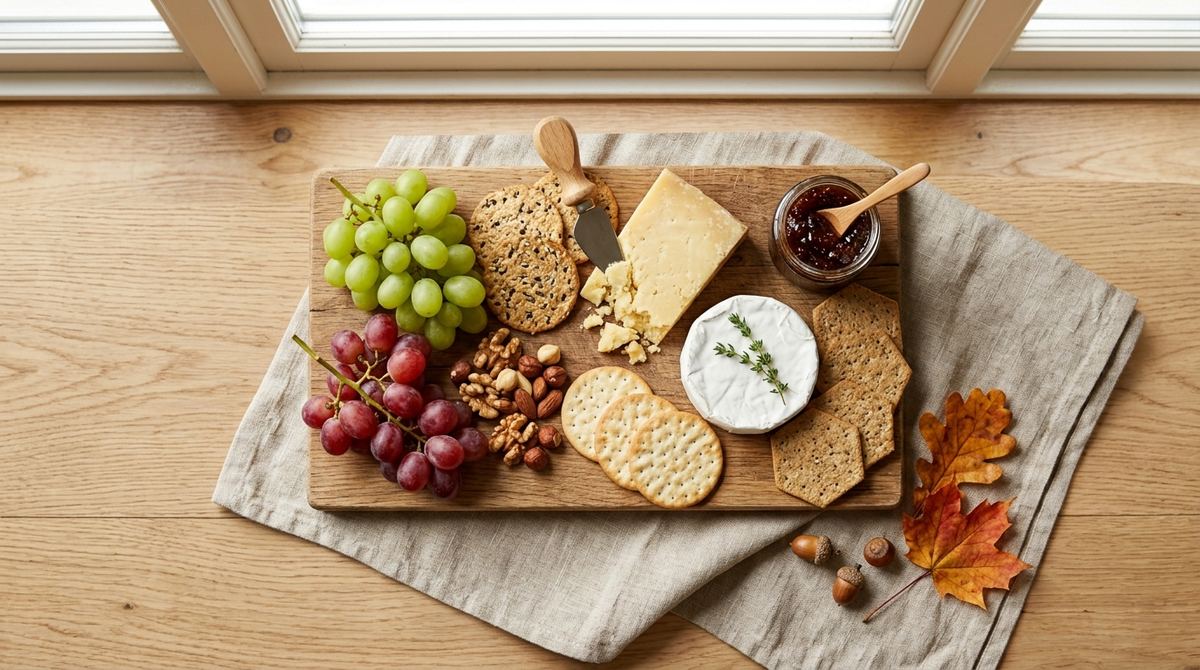
Hungry guests arriving two hours before a Thanksgiving meal is served is a predictable problem with an easy fix: a cheese board, a bowl of nuts, or a simple dip and crackers set out the moment the first person arrives buys you real time in the kitchen without anyone hovering. Keep it simple, this isn't the meal, it's a bridge to the meal.
A board that takes fifteen minutes to assemble (cheese, crackers, a jar of jam, some grapes) does more to keep people fed and out of your way than anything elaborate would.
5. Plan the Table Before You Plan the Food
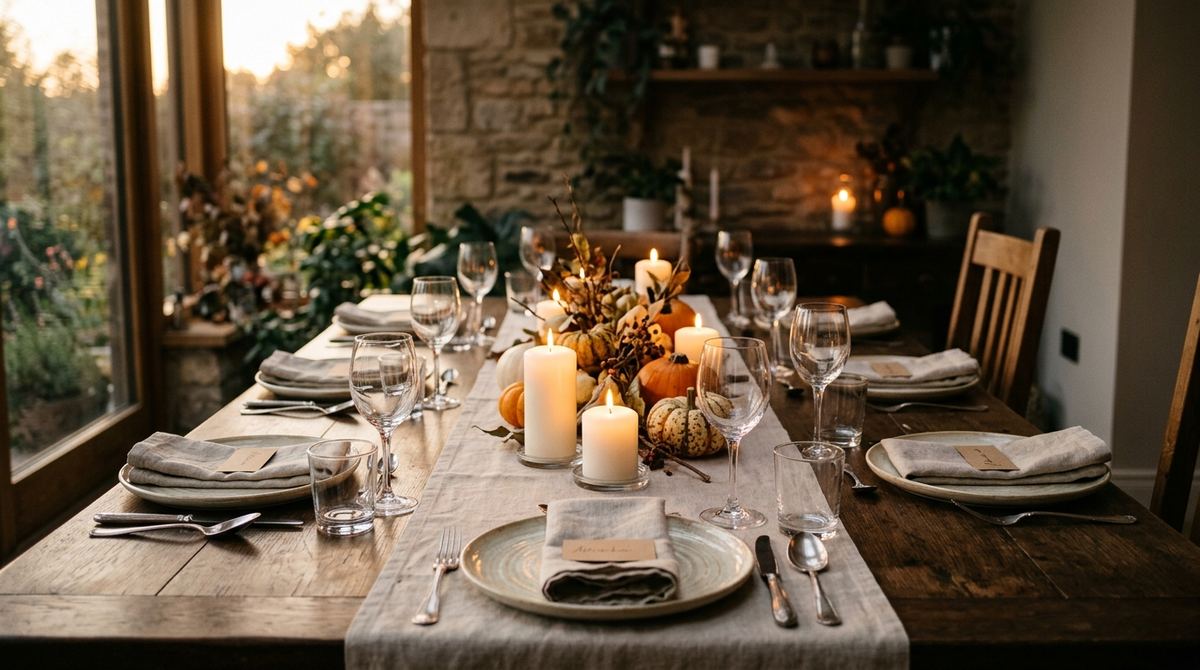
Figure out your actual seating count before you finalize the menu, not after. A table that seats eight comfortably starts to feel cramped at eleven, and cramped seating changes how much food and how many serving dishes you actually need room for. If you're short on chairs, borrowing from a neighbor is faster and cheaper than buying folding chairs you'll store for eleven months a year.
Use a table runner instead of a full tablecloth if you're mixing dining and coffee tables pushed together, it visually unifies mismatched surfaces better than trying to find one cloth large enough. Name cards solve the "who sits where" hesitation that otherwise happens right as people are trying to sit down and eat.
6. Give Kids Their Own Setup
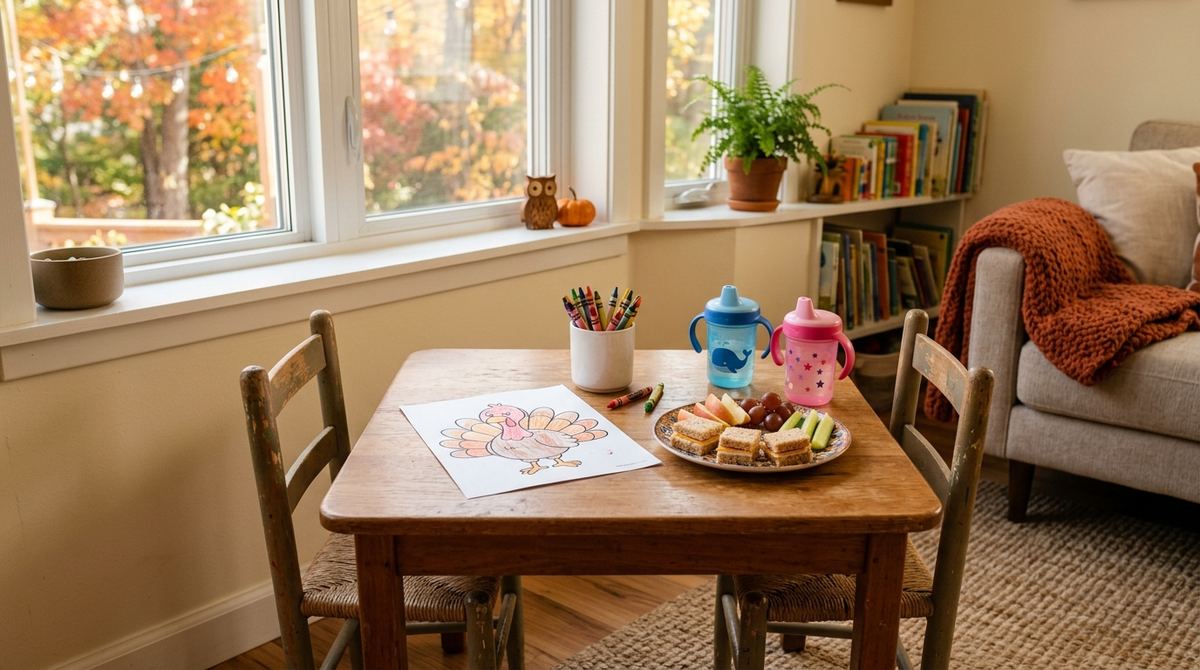
A separate kids' table, even a card table in the next room, keeps the main table conversation adult-paced and gives kids a setup where spills and squirming don't derail the whole meal. Stock it with kid-friendly versions of the main dishes served ten minutes early, so kids aren't sitting hungry while the adults finish setting up the main table.
A few coloring pages or a simple activity at each kid's spot buys another ten to fifteen minutes of calm before anyone gets restless.
7. Build in One Low-Effort Activity
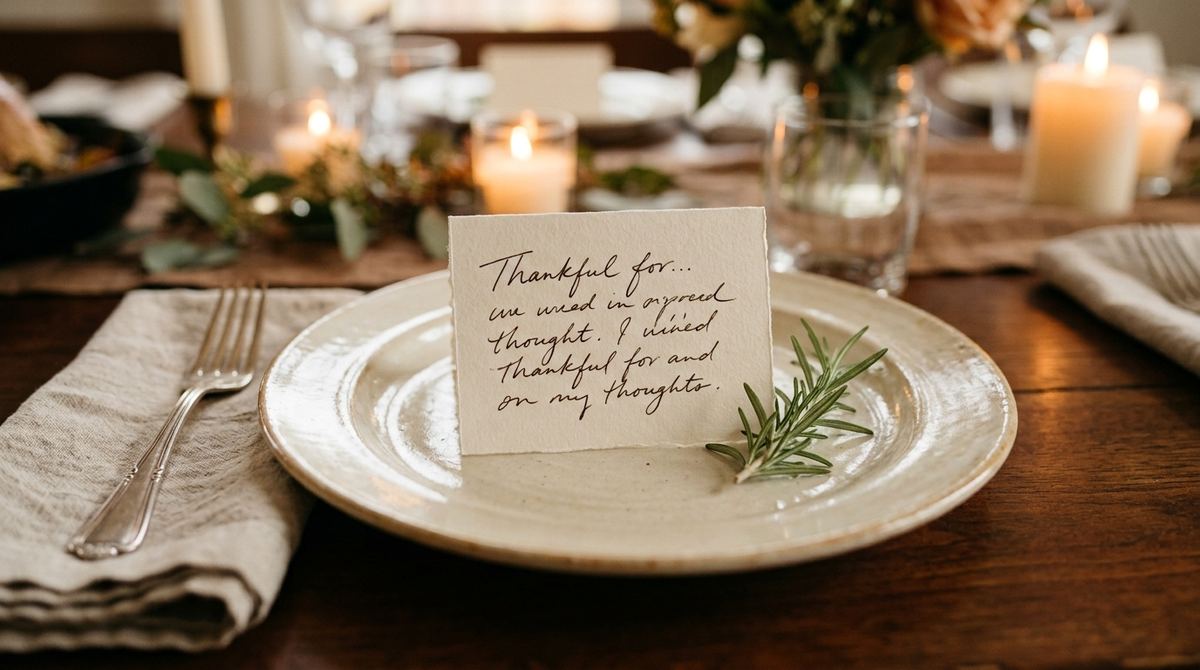
Not every Thanksgiving needs games, but one small structured moment, a gratitude round where everyone says one thing before eating, or a simple card at each place setting asking a question, gives the meal a shape beyond just eating. Keep it under five minutes. The goal is a shared moment, not a formal program that makes people uncomfortable.
For Friendsgiving specifically, a casual game after dinner (something quick like a trivia round) works better than during the meal, people are more relaxed once plates are cleared.
8. Prep a Leftovers Plan Before Dinner Starts
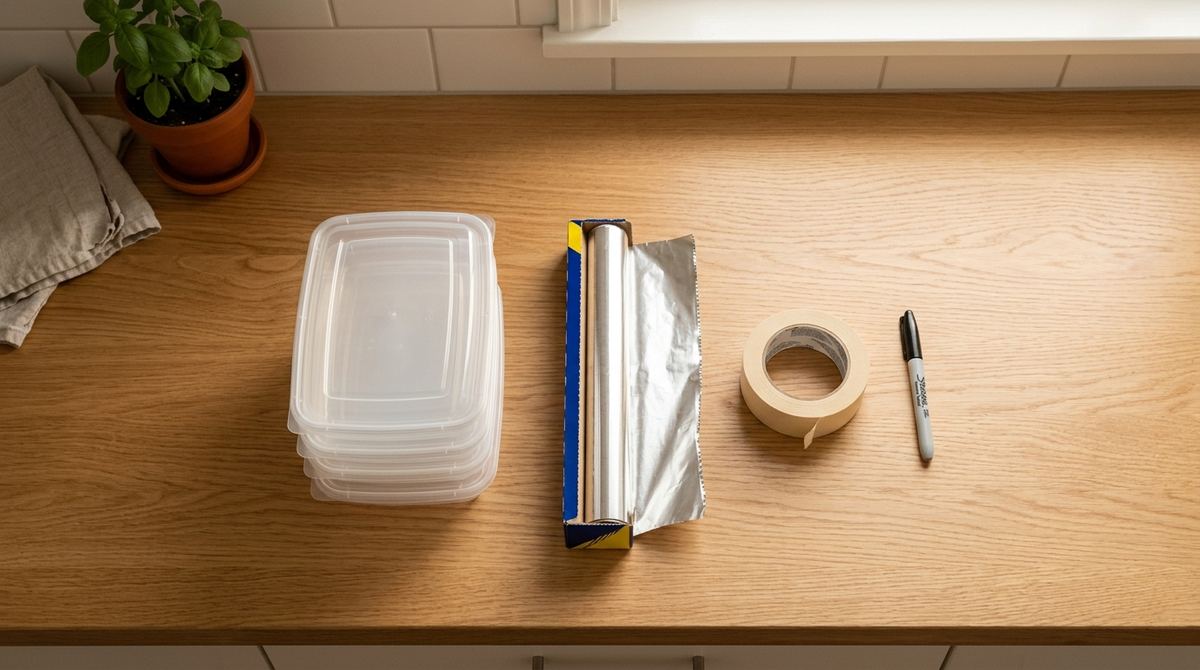
Buy disposable containers before the day of, not after, when every store nearby is picked over. Set them out on the counter early so sending guests home with leftovers is a five-minute task at the end of the night instead of a scramble while people are already putting coats on.
This is also a natural way to thin out your own fridge, you will not eat seven days of turkey by yourself, and neither will anyone else if you don't send it home with them.
9. Handle the Awkward Guest List Moments in Advance
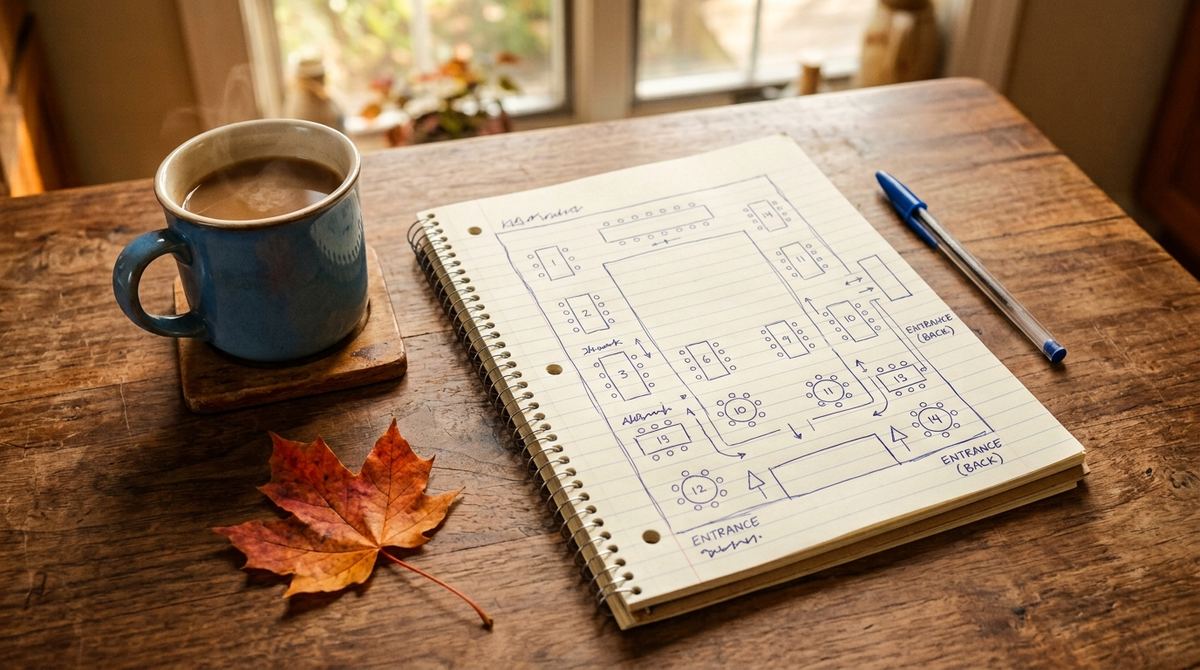
If you're merging two friend groups, blending family and friends, or seating people with a known tension between them, decide your seating plan before the day arrives rather than improvising in the moment. A little advance thought, seating certain people at opposite ends, or giving someone a task that keeps them moving instead of seated in one spot, prevents more discomfort than any amount of after-the-fact smoothing over.
You don't need to explain your reasoning to anyone. A seating chart is a completely normal thing to have regardless of the reason behind it.
10. Do One Small Thing That Guests Remember
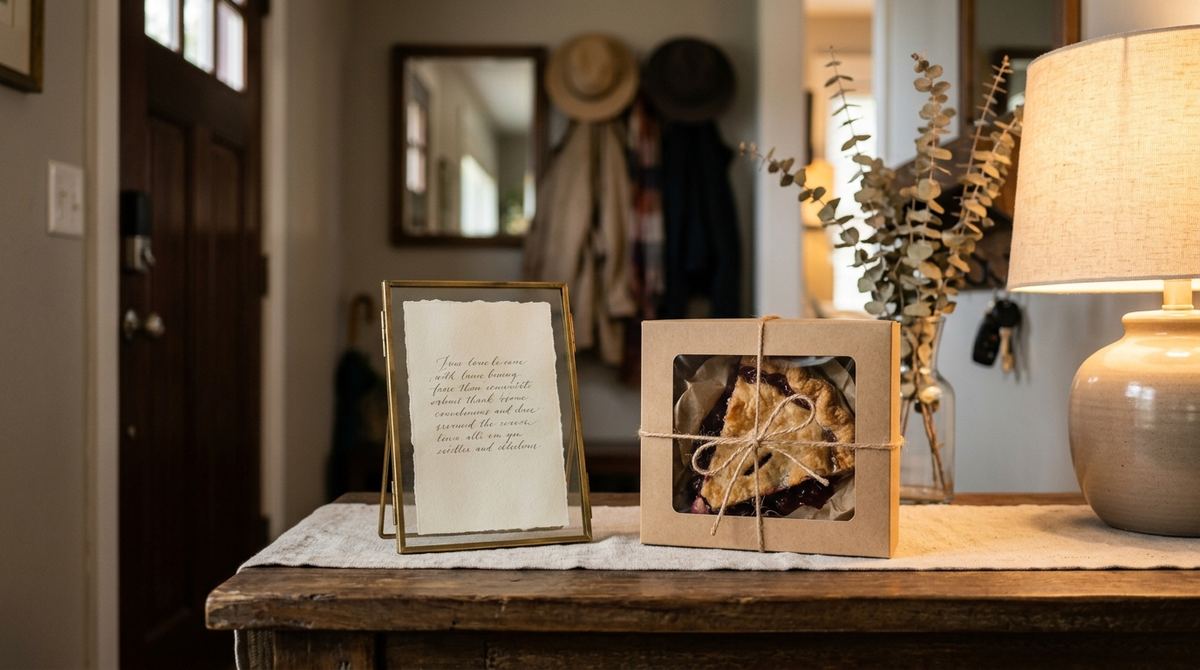
You don't need a full theme or elaborate favors. One small touch, a handwritten place card with something specific about each guest, a photo booth corner with a cheap backdrop, or a to-go container of dessert by the door, is what people actually mention afterward. Pick one thing and do it well rather than spreading a small effort across five half-finished ideas.
Sample Hosting Timeline
- 6 hours before: Turkey goes in, table gets set, drink station stocked
- 4 hours before: Side dishes prepped, appetizer board assembled and set out
- 2 hours before: Guests start arriving, appetizers and drinks are already out
- 90 minutes before: Turkey comes out, sides go in or onto the stove
- 30 minutes before: Turkey rests, table gets its final touches, everyone gets seated
- Serving time: Everything lands on the table within a 10-minute window
FAQ
How far in advance should I send Friendsgiving potluck assignments?
At least two weeks out, with a reminder text five to seven days before. This gives people enough time to shop and means you catch a "sorry, can't make it" early enough to reassign their dish.
What's a realistic number of dishes for a group of ten?
One main, two to three sides, one starch, one vegetable-forward dish, and one or two desserts covers ten people comfortably with some leftovers, without anyone needing to cook more than one dish.
Should Friendsgiving be BYOB?
It's the easiest way to keep costs fair, especially with a mixed group. Just make sure someone (usually the host) covers a backup non-alcoholic option so it's not the only choice if someone forgets or doesn't drink.
How do I host if my kitchen is genuinely small?
Lean harder into the self-serve stations and the backward timeline, both matter even more in a small kitchen because there's less room to recover from a scheduling collision. Ask one guest to run appetizers and drinks entirely so you're only managing the oven and stove.
None of this requires a bigger house or a fancier menu, it's mostly about deciding things in advance instead of in the moment. Pick two or three of these to try this year, the backward timeline and the potluck categories are the two that make the biggest difference for the least effort. Save this one before the invites go out.